
Rethinking Who Qualifies as Youth in Liberia
Admin User
3 months ago
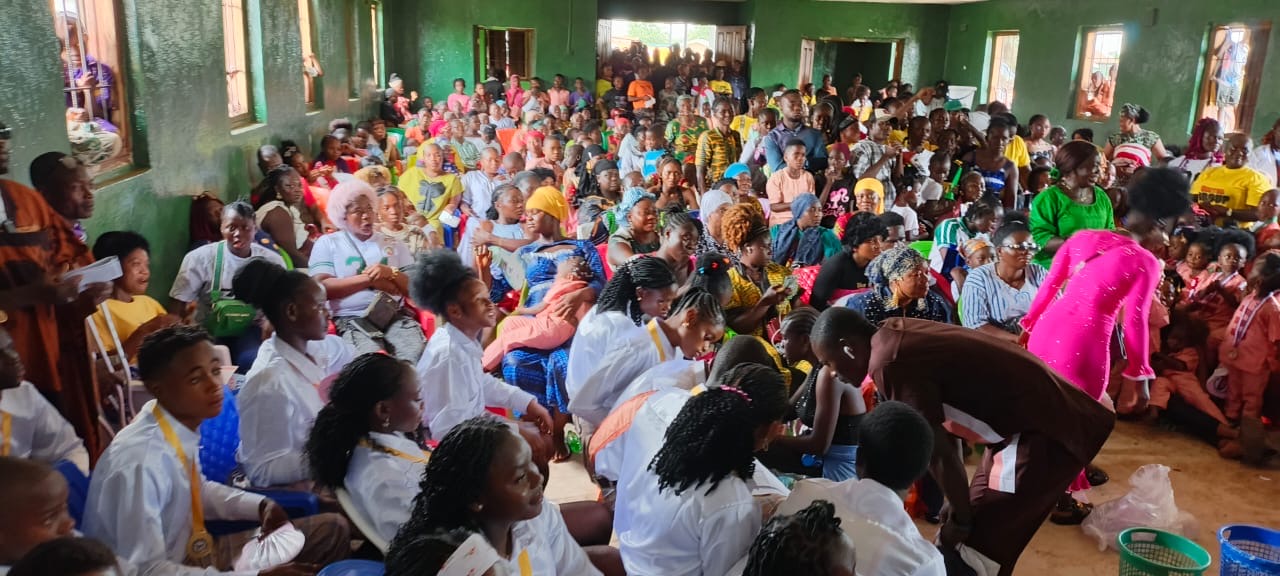
This should not become a debate about one person’s age, ambition, profession, or political future. A national policy must be able to stand on its own. It should remain fair whether it benefits someone we support, someone we oppose, or someone we may never meet. The real issue is how Liberia understands the development of its people and how the country responds to a generation whose education, employment, and movement into adulthood were repeatedly disrupted by circumstances beyond its control.
No serious person would argue that someone in the late thirties is biologically the same as a teenager or a person in the early twenties. A person approaching forty is an adult and should carry the responsibilities that adulthood brings. That is not in dispute.
What deserves closer examination is whether age alone proves that a person has completed all the educational, economic, professional, and political transitions normally associated with youth, especially in a country where war, displacement, disease outbreaks, and prolonged hardship interrupted those transitions for thousands of citizens.
Liberia generally follows the African Union framework, which defines youth as people between the ages of fifteen and thirty-five. That definition is useful. It supports national statistics, regional comparison, development planning, and coordination with institutions across the continent. There is no good reason to abandon it carelessly.
The difficulty is that one age range is being asked to do too much.
A sixteen-year-old secondary school student is not in the same stage of life as a twenty-eight-year-old unemployed university graduate. Neither faces the same circumstances as a thirty-four-year-old farmer, teacher, entrepreneur, parent, or emerging public leader still trying to establish a secure livelihood. They may all fall within the same general category, but their needs are not the same.
Youth is partly about chronological age. In public policy, however, it is also about transition. It is the period in which people complete school, enter employment, begin careers, establish businesses, gain financial independence, form households, and take on a larger role in public life.
Those transitions do not happen at the same age everywhere. They do not even happen at the same age for everyone within the same country.
In societies with stable schools, functioning labor markets, reliable institutions, and sustained economic growth, the path from childhood into adulthood is often more predictable. A person moves from primary school to secondary school, from secondary school to university or vocational training, and from education into employment. Along the way, the person gains work experience, earns an income, secures housing, starts a business, or begins a family.
Liberia’s experience has been different.
Many Liberians now in their mid-to-late thirties were born or raised during one of the most destructive periods in the country’s history. When the civil conflict began in 1989, thousands of children were removed from classrooms and placed in conditions no child should endure. Schools closed. Teachers fled. Communities were destroyed. Families were displaced across counties and national borders. Educational records disappeared. Parents and guardians were killed or separated from their children.
Some young people entered school years later than expected. Others stopped and restarted their education whenever security conditions changed. For many, childhood was not a period of steady development. It was a period of survival.
The formal end of the conflict in 2003 did not restore everything that had been lost. Peace could stop the fighting, but it could not immediately rebuild schools, replace teachers, restore household incomes, create jobs, repair roads, or strengthen institutions weakened by years of war.
For many Liberians, the post-war years were not a normal beginning to adulthood. They were years spent recovering an education, supporting relatives, searching for work, and rebuilding lives that had already been delayed.
Some returned to primary or secondary school at ages when their counterparts elsewhere were preparing for university or employment. Others entered college after long interruptions and paid their fees one semester at a time. Even after graduation, stable employment was far from guaranteed.
Many spent years volunteering, moving between short-term contracts, accepting informal work, or surviving through temporary assignments. Some had qualifications but no job. Others had business ideas but no access to capital. Many remained dependent on relatives long after reaching legal adulthood, not because they lacked ambition, but because the economy offered too few reliable pathways into independence.
Then Ebola came.
The 2014 Ebola outbreak was not only a public health emergency. It became another disruption in the lives of people still trying to recover from the consequences of war. Schools and universities closed. Businesses struggled. Jobs disappeared. Families lost income and loved ones. Some young adults became responsible for younger relatives. Others saw their studies, careers, and business plans delayed once again.
Before Liberia could fully recover, COVID-19 brought another period of educational and economic disruption. The pandemic affected the entire world, but it reached Liberia at a time when many citizens had not yet recovered from previous national emergencies.
When these events are viewed together, a difficult truth becomes clear. One Liberian generation did not simply grow older. It grew older while repeatedly losing access to the institutions and opportunities that normally help people move into stable adulthood.
That history should not be exaggerated. Not every person from that generation remains disadvantaged. Many have become professionals, business owners, farmers, educators, journalists, health workers, public servants, and community leaders. Their achievements deserve recognition.
It would be wrong to describe an entire generation as helpless or permanently dependent.
It would also be wrong to allow a well-established adult in the late thirties to compete directly with a struggling nineteen-year-old for the same scholarship, student opportunity, first-job program, or small youth grant. Recognizing history must never become a way for older and better-connected people to take resources intended for younger citizens.
That is why this debate requires balance.
One extreme would be to declare everyone below forty a youth for every purpose. That would be too broad, too easy to manipulate, and potentially harmful to people in their teens and twenties.
The other extreme would be to treat the thirty-fifth birthday as the automatic end of every educational, economic, professional, or political transition, regardless of the conditions through which a person reached that age. That would be equally unrealistic. It would assume that every year of life offered the same opportunities, even when Liberia’s own history proves otherwise.
Countries around the world have answered the youth question differently because they have faced different problems.
The United Nations commonly uses fifteen to twenty-four for statistical purposes. The African Union uses fifteen to thirty-five, reflecting the longer path to employment and economic independence in many African societies. Nigeria narrowed its definition in order to focus limited resources more heavily on younger citizens. Malaysia once recognized youth up to forty but later reduced the upper age because older members were remaining too long in youth leadership and limiting opportunities for succession.
South Africa retained a broader definition because its policies acknowledge that historical injustice continues to affect education, employment, inequality, and social advancement. Somalia adopted one of the broadest definitions on the continent in response to prolonged conflict, displacement, interrupted education, and weak institutions.
These countries did not make different choices because one understood aging better than another. They were responding to different national realities.
Nigeria was concerned about the proper use of scarce resources. Malaysia was concerned about leadership renewal. South Africa considered the continuing effects of historical exclusion. Somalia responded to the long-term consequences of conflict and displacement.
Liberia should learn from all of them without copying any of them.
The lesson from Nigeria and Malaysia is that youth programs can be captured by older and better-connected people unless age limits, term limits, and institutional safeguards are taken seriously. The lesson from South Africa and Somalia is that history matters and that a country may reasonably take delayed opportunity into account when shaping public policy.
The issue before Liberia is therefore not simply whether the upper age should be thirty-five or forty. No single number can answer every educational, economic, social, and political question.
The age appropriate for a secondary school scholarship is not necessarily the age appropriate for an entrepreneurship fund. The age used for adolescent health services may not be suitable for political leadership development. A first-time agricultural investor faces different challenges from a first-time voter. A person seeking vocational training at eighteen is not in the same position as someone whose professional career was repeatedly interrupted by national crises.
Using different age limits for different programs would not create confusion. It would allow policy to respond more precisely to the problem being addressed.
This becomes especially important in politics.
Liberia does not presently have a clearly established and separate legal definition of political youth. In practice, political participation by young people is generally discussed within the broader national youth-policy framework. Formal political participation, however, begins at eighteen, when a citizen becomes eligible to register and vote.
For practical purposes, a political youth in Liberia may therefore be understood as a citizen between eighteen and thirty-five who participates in elections, political parties, advocacy, civic education, public debate, community mobilization, or governance.
That is the clearest interpretation under the present framework. It still does not answer the deeper question of when a person should cease to be considered an emerging political leader.
Liberia’s Constitution establishes a gradual path into political authority. A citizen may vote at eighteen. Eligibility for the House of Representatives begins at twenty-five. Eligibility for the Senate begins at thirty. A person must be at least thirty-five to contest for President or Vice President.
This creates a serious tension between the general youth definition and the constitutional path to national leadership.
At thirty-four, a Liberian may still be classified as a youth but remains constitutionally too young to seek the presidency. At thirty-five, the person reaches the minimum presidential age and the upper boundary of the African youth category at almost the same time. At thirty-six, that citizen is constitutionally qualified to seek every elected national office but may no longer be recognized as a youth under a strict reading of the policy framework.
A citizen can therefore spend seventeen years voting before becoming eligible to seek the presidency.
During those years, young Liberians are often encouraged to attend rallies, campaign for candidates, mobilize communities, organize party auxiliaries, defend political interests, and persuade others to vote. Yet when they seek nominations, campaign financing, control of party structures, or real policy authority, many are told to wait, gain more experience, or support someone older.
By the time some have acquired the education, public confidence, community relationships, experience, and financial strength needed to compete seriously, they may already have crossed the general youth threshold.
Liberian society may still describe people in their late thirties or early forties as young politicians, especially when they are compared with leaders who have remained in national politics for decades. That description may make sense socially, but it is not a formal legal category.
Public policy should therefore distinguish between a political youth and an emerging political leader.
A political youth may reasonably refer to a citizen between eighteen and thirty-five who participates in elections, political parties, advocacy, and governance. An emerging political leader could refer to a citizen between twenty-five and forty who is moving from political participation into candidacy, policymaking, party leadership, or elected office.
That second category does not presently exist as a binding legal definition. It would require a deliberate policy decision. Its purpose would not be to declare everyone below forty a youth. It would recognize that the journey into serious political leadership often continues beyond the general youth-policy threshold.
The category would begin at twenty-five, the constitutional age for election to the House of Representatives. It would include the qualifying ages for the Senate and presidency and provide a limited period after thirty-five during which a person may still be recognized as part of an emerging generation of political leadership.
It could guide candidate preparation, policy training, public debates, mentorship, civic leadership, internal party participation, and efforts to improve generational representation in public life.
Such recognition would not change the Constitution. It would not lower the age for any elected office. It would not guarantee anyone a party nomination, campaign financing, reserved position, or seat in government. It would simply acknowledge that a person does not become politically established on the same day that he or she becomes constitutionally eligible to lead.
The objections to reform are serious and should not be brushed aside.
Some Liberians will argue that forty is not youth and that the country cannot keep extending youth status because people experienced hardship. Others will say that public resources are already limited and should be concentrated on students, unemployed school leavers, and people entering the labor market. There will also be a valid fear that politically connected adults could use a wider definition to dominate youth organizations, capture grants, and delay leadership succession.
Those concerns are reasonable.
Any proposal that simply replaces thirty-five with forty across every youth program should therefore be rejected. Public policy cannot restore childhood, reverse the calendar, or correct every historical injustice by extending an age limit.
Younger Liberians also face serious challenges, including unemployment, poor educational outcomes, drug abuse, limited access to technology, rural-to-urban migration, and lack of business capital. Their future must not be sacrificed in an effort to address the delayed opportunities of those who came before them.
A more balanced approach would be for Liberia to retain fifteen to thirty-five as its general national and statistical definition of youth while creating clearer categories for different programs.
People between fifteen and twenty-four should receive protected investment in education, technical and vocational training, health, first employment, digital skills, civic education, sports, and social protection. Funding intended for this group should be clearly identified and should not be diverted to older categories.
People between twenty-five and thirty-five should receive stronger support in employment, entrepreneurship, agriculture, professional development, access to finance, housing, and political participation.
Citizens between thirty-six and forty should not automatically be classified as youth for every purpose. Liberia could instead consider a limited post-conflict transition category for carefully defined programs involving entrepreneurship, professional retraining, employment recovery, first-time productive investment, agriculture, and emerging political leadership.
This should remain a policy category, not a permanent social identity.
A successful business owner, senior public official, or established professional should not qualify merely because of age. Eligibility should depend on the disadvantage the program is designed to address, the applicant’s previous access to public support, and the public value the intervention is expected to produce.
People above thirty-five should not be allowed to control ordinary youth organizations indefinitely. They may serve as mentors, advisers, trainers, or trustees, but elected leadership in organizations established for people between fifteen and thirty-five should pass to those within that age range.
Every publicly supported youth organization should have clear age requirements, term limits, transparent elections, and proper financial accountability.
Separate funding arrangements would also be necessary. Programs for those aged fifteen to twenty-four should have protected resources. Programs for people between twenty-five and thirty-five should concentrate on employment, enterprise, and economic independence. Any program serving a post-conflict transition category should have its own limited allocation and should not reduce investment in younger citizens.
No such arrangement should be treated as permanent.
The effects of war and national emergencies will change as new generations come of age. Education may become more stable. Entry into employment may improve. The historical reasons for a special category may gradually lose their relevance.
Any transitional arrangement should therefore be reviewed every five years and should include a clear expiration mechanism. The review should determine whether the category remains necessary, whether it is reaching the intended people, whether it is producing measurable value, and whether it is limiting opportunities for younger citizens.
That review should not begin with a fixed conclusion. It should be independent, nationally representative, and grounded in evidence.
It should examine the age at which Liberians complete school, enter stable employment, establish businesses, acquire productive assets, form independent households, and begin participating meaningfully in national leadership. It should also consider the differences between rural and urban communities, women and men, people with and without disabilities, and citizens with unequal access to education, technology, finance, and political networks.
A serious review may conclude that the current definition should remain unchanged. It may recommend different age limits for different programs. It may support a transitional category or reject one.
What matters is that the answer should come from evidence, public consultation, and the long-term interests of Liberia rather than political convenience.
This conversation must never become a struggle between generations.
Older Liberians also suffered during the war, lost loved ones, rebuilt communities, and carried institutions through difficult periods. Their experience and sacrifices deserve respect. Those who came of age during and immediately after the conflict should not have their interrupted journey ignored. At the same time, people now in their teens and twenties cannot be told to wait indefinitely because the generation before them is still seeking its opportunity.
A fair national policy should respect the experience of older citizens, recognize genuinely delayed progress among the post-conflict generation, and protect the future of the youngest Liberians. It should not decide that one generation matters more than another. It should give each group support suited to its stage of life, level of need, and capacity to contribute.
The purpose of youth policy is not to tell citizens how old they are. They already know that. Its purpose is to guide how a nation invests in education, employment, enterprise, citizenship, and leadership as people move toward productive and responsible adulthood.
Liberia cannot reopen every classroom that war closed. It cannot restore every opportunity interrupted by Ebola or reverse all the economic damage caused by repeated national crises. It should not use history to excuse dependency, irresponsibility, or the permanent control of youth institutions by adults.
It can, however, refuse to pretend that every citizen reached adulthood under the same conditions.
The task is not to declare that forty is the new twenty. It is to build a policy that protects the youngest, supports those establishing their independence, recognizes genuinely delayed transitions where the evidence justifies doing so, and prevents every category from being captured by private or political interests.
History cannot return the years Liberia lost. Wise public policy can ensure that those lost years do not continue deciding who receives a fair chance to contribute to the country’s future.
James Papy Kwabo is a Liberian educator, media development practitioner, public policy advocate, and community leader. He writes on youth development, education, democratic participation, media, and local governance.
Comments (1)
Mohammed S Talawallay
3 months ago
I believe the current definition of youth in Liberia codified as persons between 15 and 35 years while aligning with the African Youth Charter, which has become a victim of its own breadth. It is a demographic catch-all that obscures more than it clarifies. By lumping a 15-year-old adolescent with a 34-year-old adult, where our policy framework fails to distinguish between those in need of basic protection and those ready for economic production. Now, this conflation is not merely semantic; it has direct, detrimental consequences, and effects.The state's fiscal commitment tells a damning story: despite 75% of the Liberian population being under 35, the Ministry of Youth and Sports allocates less than 5% of its budget to youth services, with the lion's share consumed by sports and administration. The result is a system that treats youth as a "future promise" rather than a "present force", leaving 44.2% of those aged 15–24 neither in education, employment, nor training. This is not a crisis of numbers, but a crisis of neglect and a definition that has enabled policy inertia. And I do believe in order to find remedial measures, it requires a paradigm shift from viewing youth as a monolithic nor liabilities problem to start recognizing them as a stratified asset. The first step is operational differentiation: we must adopt a tiered policy approach that distinguishes between adolescents (15–17), who require protection and foundational education; emerging youth (18–24), who need employment pathways and skills training; and established youth (25–35), who require access to capital and leadership opportunities. This nuanced framework must be anchored by structural reforms, such as the proposed review of the 1982 Act that established the Ministry of Youth and Sports, a relic of a military era designed for control rather than empowerment. Crucially, we must move beyond fragmented programming to create a "Pathways" architecture that links education, vocational training, and....